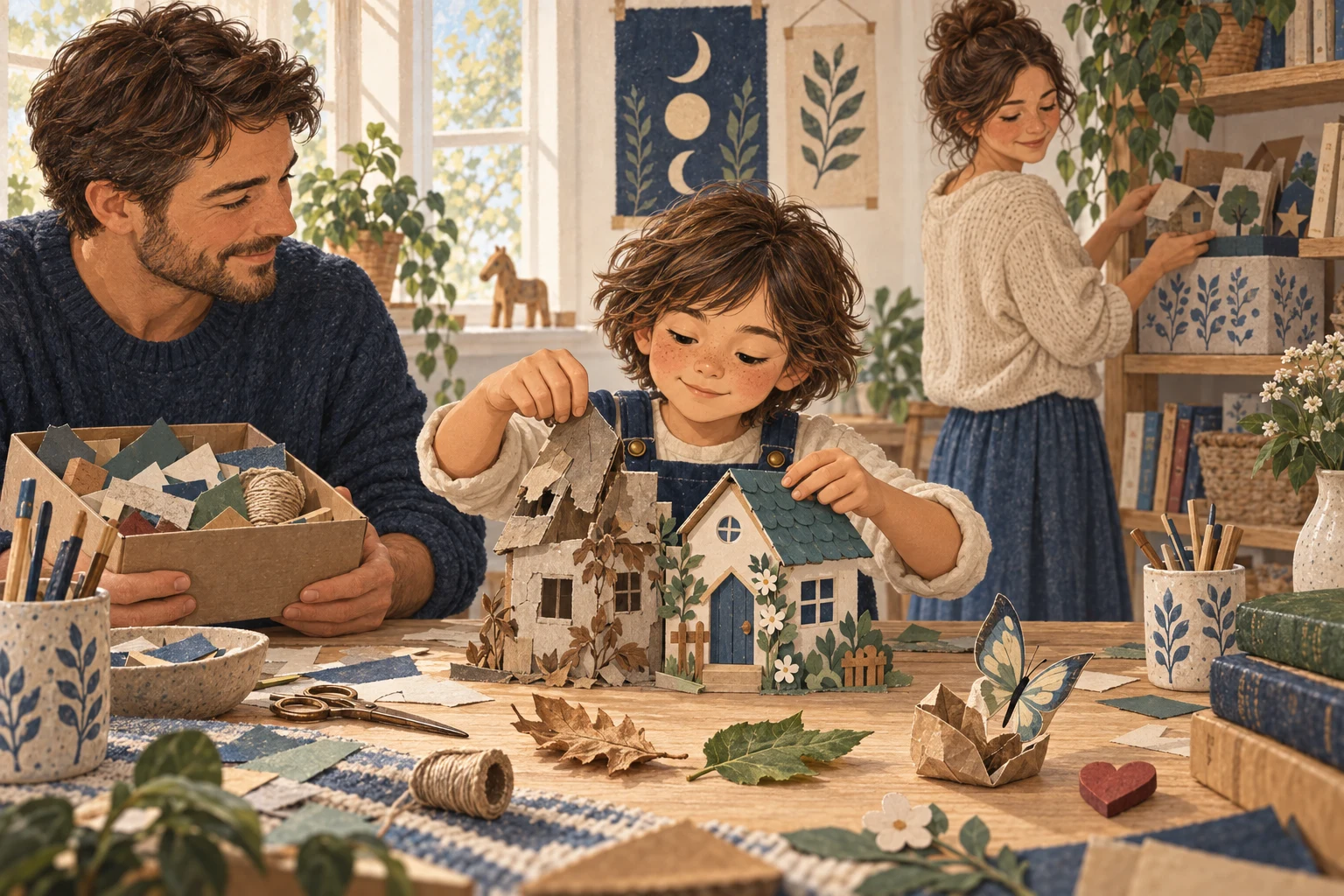
An ending is not the end of everything important; it makes room for the next step.
Why does a child change game rules, notice when something no longer fits, and want to try a new way? Why can parting from the familiar bring tears or strong resistance?
In the AstraFate child chart, these patterns connect with Tarot Arcana 13, Death. In a child-focused conversation it is an image of transformation: finish one stage, keep what matters, and begin the next. It is not a prediction of a literal death.
The chart is symbolic observation, not a diagnosis or forecast. Consider the child's age, temperament, and real circumstances.
What Arcana 13 can mean for a child
Death may show a strong character, early boundaries, courage, and readiness to renew routines. Possible strengths include decision-making, resilience, flexibility, and beginning again after setbacks.
Transformation does not require constant intensity. Children still need calm days, familiar rituals, and an adult who can hold difficult feelings.
Living through an ending
Explain what is ending and what remains: a ritual, photo, story, skill, or connection. A small goodbye ritual makes a transition visible. Sort one shelf at a time and then mark a new beginning.
Change without pressure
Name worry about the unknown, separate what can be controlled, and break a large change into short steps. Do not demand fearlessness. If interests change often, choose one main project for a short trial and celebrate completing its stage.
Strong boundaries and kindness
Support the child's right to say no while explaining that a boundary never permits humiliation or harm. Voluntary, manageable help for others and caring for animals can direct intensity toward creation. Model repair and starting again.
When renewal becomes destruction
Under overload, a child may cling to the past, resist giving things away, abandon tasks sharply, take unsafe risks, or flare up. In the childhood-scenario layer, ‘loss and separation’ indicates a possible risk of fear and avoidance around new stages. It does not claim this happened. Naming feelings, goodbye rituals, and support can make change safer.
Arcana 13 talents: what to try
Choose activities where a child can transform an idea or object and practise finishing. Treat a club as an experiment.
- Drawing, theatre, acting, and design
- Restoration, repairs, crafts, and upcycling
- Coding, robotics, physics, and safe experiments
- Hiking, climbing, and navigation
- Dance, gymnastics, swimming, and active movement
Reading Arcana 13 in a child's chart
The meaning changes with the position and neighbouring programs. One Arcana does not describe a whole child or predict a literal death. In a leading position it may show courage, boundaries, flexibility, and renewal. In the childhood-scenario layer, ‘loss and separation’ may point to fear of change; read it as prevention and support, not a fact.
A practice for today
Choose one small transition. Ask what the child wants to keep and release, then draw three points: ‘ending’, ‘what stays’, and ‘what I will try next’. Say: ‘Change can feel sad and still be safe. I am here while you adjust.’
Sources and limits
This Arcana 13 description is based on AstraFate's child-matrix program and position-reading rules. It is an esoteric method for reflection, not a scientific assessment.
Qualities, talents, and activities are possibilities to try, not guarantees or substitutes for professional support.
The key message of Arcana 13 for a child
Death in a child's chart speaks about finishing stages and renewal, not a literal event.
Help the child keep what matters, let go gradually, and begin again in small steps. Change can then become growth rather than loss of support.