
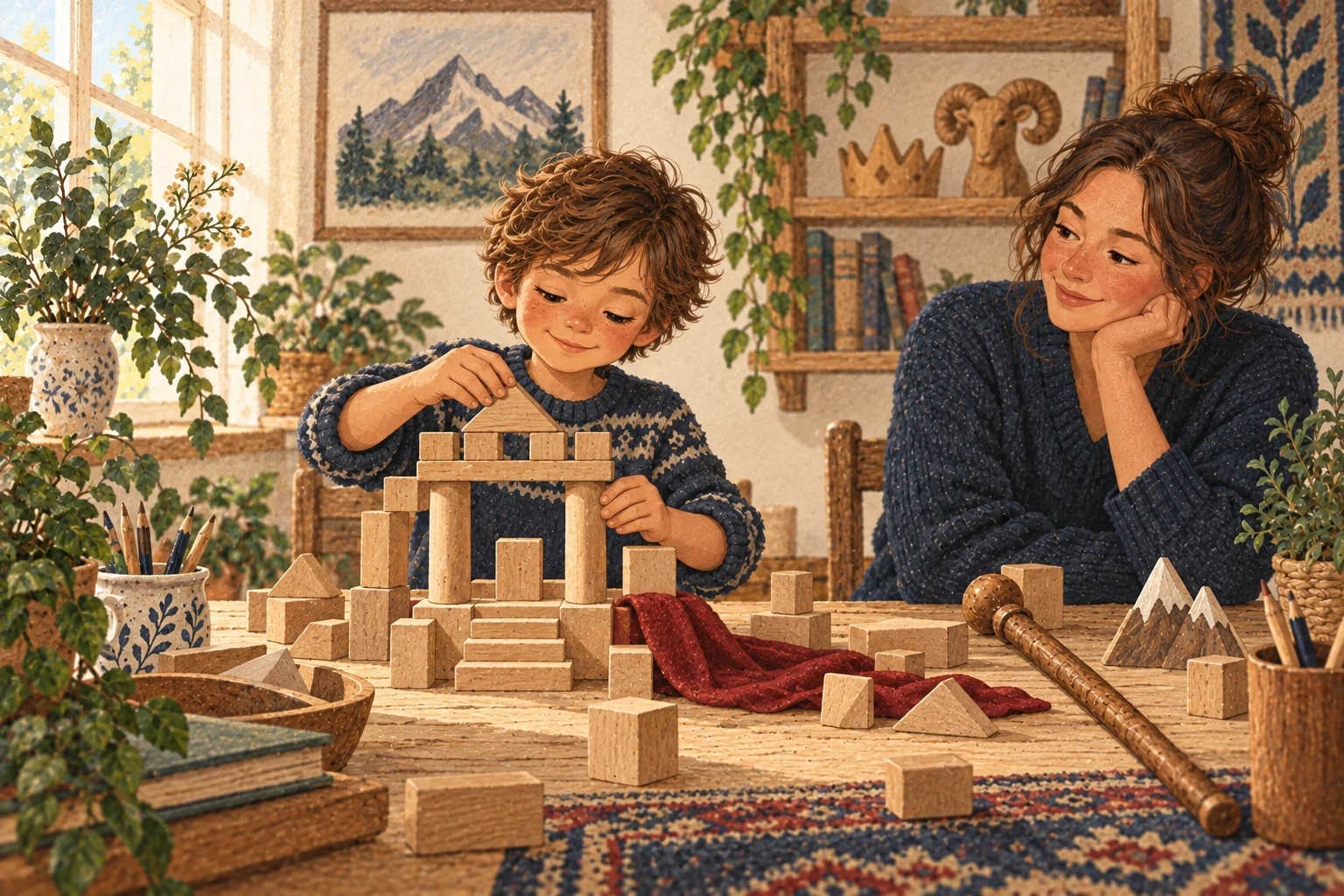
A child's strength grows where rules are clear and their voice is heard.
Why does a child want to decide how a game works, argue about rules, or ask for a real task they can own? Why can losing sometimes feel like losing respect?
In the AstraFate child chart, these patterns connect with Tarot Arcana 4, the Emperor. Its theme is inner structure, order, responsibility, and the ability to lead. For parents, it is a guide to setting clear boundaries while leaving safe room for strength.
The chart is symbolic observation, not a diagnosis or a fixed forecast. Check it against the child's age, personality, and real circumstances.
What Arcana 4 can mean for a child
The Emperor wants to understand how a shared task works and what they can influence. A child may ask for more independence, protect someone close, assign roles in play, and persist until a plan is complete.
Strengths include decisiveness, logic, strategic thinking, dignity, and keeping order in a difficult moment. It helps to see the link between a choice, an action, and its consequence.
This does not mean a child must be the commander. Strength can be quiet: building a model, planning a route, caring for a younger child, or calmly stating a boundary.
Clear rules instead of harsh control
Rules work better when a child understands their purpose. Explain one condition: ‘The helmet protects your head. After riding, we put the bike away.’
Offer choice inside the boundary: what to do first, which role to take, or how to complete the task. The adult keeps safety while the child experiences influence.
When a rule is broken, discuss the action and the repair. Do not label the child as bad or difficult; an error is a chance to restore the agreement.
Age-appropriate responsibility
Give real but manageable duties: checking a backpack, watering a plant, setting the table, or preparing materials for a family project.
Hand over the whole task: agree on the result, timing, and how to ask for help. Afterwards, ask what worked and what to change.
Do not take over at the first mistake. Break the task into steps and let the child repair the consequence.
Leadership without commanding
A strong Arcana 4 child may see a plan quickly and want everyone to follow it. Teach leadership through cooperation: listen, share roles, ask for help, and yield when it serves the team.
Try: ‘You can suggest rules, but everyone needs to agree.’ This shows the difference between influence and pressure.
Team activities, a project with friends, or helping a coach offer safe practice in leading while noticing other people's feelings.
When the need for structure becomes control
Under overload, firmness can become sharpness, painful reactions to losing, fights for first place, or rules imposed on everyone. Fear of mistakes may sit behind the pressure.
Name what you see: ‘You are very angry that the plan changed.’ Set the boundary: ‘We do not shout or push.’ After a pause, find another way to ask for order or help.
If the child stops taking initiative, check whether adults are taking every decision. Support means consistency and contact, not total control.
Emperor talents: what to try
Possible strengths include logic, systems, planning resources, protecting boundaries, and bringing people toward a clear goal. Try activities with a visible result and manageable responsibility.
Choose a direction as an experiment, not an early career decision. Gender does not limit sport, creative, or technical choices.
- Building, robotics, and project clubs
- Chess, debate, coding, and logic games
- Team sports, martial arts, and orienteering
- Theatre, history, and leadership activities
- Economics, design, cooking, and children's enterprise projects
Reading Arcana 4 in a child's chart
The Emperor changes with the position and neighbouring programs. One Arcana cannot describe a whole child or explain behaviour without context.
In a leading position it can show the ability to create structure, decide, and organise a shared task. In everyday points it may show a habit of owning outcomes, protecting space, and seeking clear rules.
In the childhood-scenario layer, ‘authoritarian rules’ indicate a possible risk of early subordination or excessive control. This does not claim it happened. Respectful dialogue, flexible agreements, and room for feelings soften the risk.
A practice for today
Choose one family task and invite the child to coordinate it: make a list, divide steps, or check readiness. Make clear that adult help is available.
Agree on two safety rules and leave choices inside them. Afterwards discuss not only the result but how decisions affected others.
Ask: ‘Where was leading easy? Where did you need help?’ This connects independence, empathy, and responsibility.
Sources and limits
This Emperor description is based on AstraFate's Arcana 4 child-matrix program and its position-reading rules. It is an esoteric method for reflection, not a scientific personality assessment.
Qualities, talents, and activities are possibilities to try. They are not guarantees and do not replace professional support when a child struggles with emotions or behaviour.
The key message of Arcana 4 for a child
The Emperor helps a child feel, ‘I can influence and take responsibility,’ when a calm adult and clear rules are close by.
Support initiative, limit only what is unsafe, and teach the child to hear others. Strength can then become a foundation, and leadership a way to create order without pressure.