
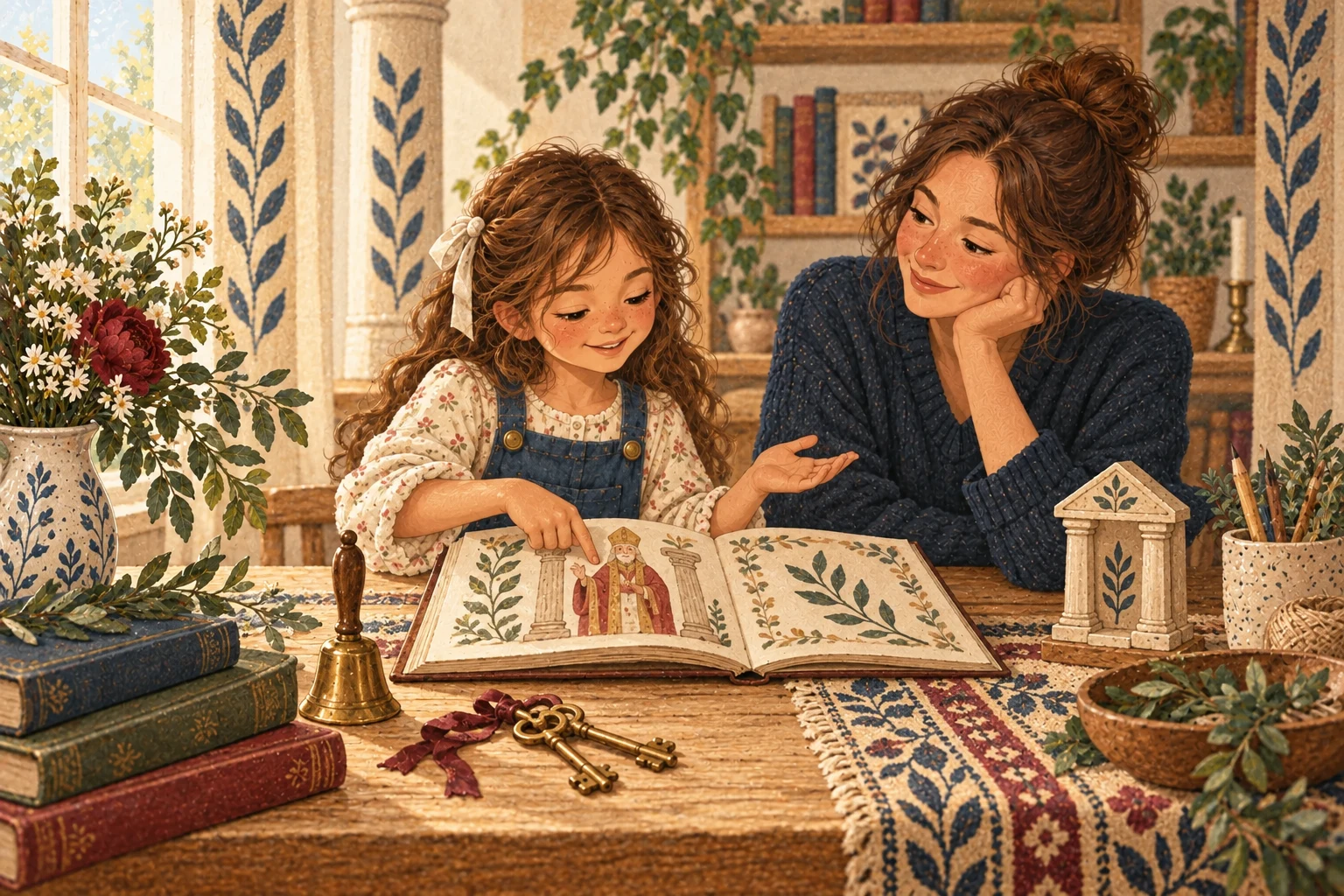
Knowledge becomes support when it helps a child think and act rather than fear mistakes.
Why does a child like explaining how things work, ask many questions, and feel upset when an adult calls an answer wrong? Why do familiar routines and family rituals matter so much?
In the AstraFate child chart, these patterns connect with Tarot Arcana 5, the Hierophant. Its theme is knowledge, clear order, tradition, and sharing experience. It can help parents support learning without turning it into a race for grades.
The chart is symbolic observation, not a diagnosis or fixed forecast. Consider the child's age, interests, and real actions.
What Arcana 5 can mean for a child
The Hierophant likes to understand why a rule exists and see a sequence. A child may listen carefully, learn quickly, ask ‘why’, and enjoy showing another person a clear method.
Strengths include curiosity, clear speech, memory, systems, reliability, and respect for a competent adult.
A child does not have to be a perfect student or live only by tradition. Interest may appear in family history, science, languages, symbols, music, craft, or questions about what matters to people.
Learning for understanding, not only grades
Ask not only ‘what grade did you get?’ but ‘what became clearer?’ Invite the child to explain a topic in their own words or show a real-life example.
Separate an error from identity: ‘That answer did not work yet. Let’s find the difficult step.’ Mix books and rules with practice, creativity, walks, and new people.
Traditions, values, and choice
Family rituals create connection when children understand their meaning and can participate. Explain why you keep a tradition and let the child choose one part of it.
Show that other families and cultures may have different rules. Respect for tradition does not require calling it the only right way.
Mentoring without lecturing
Support the wish to help, while teaching the child to ask first: ‘Would you like to hear how I see it?’ Practise listening and changing an opinion when new facts appear.
A calm, competent adult, teacher, or coach can model how to ask questions without shaming anyone for not knowing.
When love of rules becomes rigidity
Under overload, Arcana 5 can look like certainty that only one view is right, dependence on grades, fear of mistakes, unsolicited advice, or mocking someone who knows less. Anxiety about not meeting expectations may be underneath.
Name the feeling and keep the boundary: ‘You are upset about the mistake. We do not mock another person.’ If a child is afraid to be different, notice effort, questions, and courage to try. Love does not depend on a perfect answer.
Hierophant talents: what to try
Possible strengths include logic, speech, organising information, memory, and sharing knowledge. Choose activities where the child can investigate, explain, and see practical meaning.
Treat a club as an experiment, not a required career.
- Chess, puzzles, maths, and logic games
- Languages, reading, speaking, and debate
- History, local studies, museums, and research projects
- Music, folk dance, crafts, and cooking
- Yoga, martial arts, and activities with clear discipline
Reading Arcana 5 in a child's chart
The meaning changes with the position and neighbouring programs. One Arcana cannot describe a whole child.
In a leading position, Arcana 5 may show learning, teaching, and shared values. In everyday points, it can show a habit of seeking order, keeping agreements, and turning to adult experience.
In the childhood-scenario layer, ‘high moral standards and dogma’ indicate a possible risk of pressure to fit a standard, not a claim about the past. Help the child name shame and guilt, ask questions, and keep the right to be themselves.
A practice for today
Choose one family rule or tradition and discuss its purpose. Invite the child to suggest one way to make it work better for everyone.
Ask the child to explain a new topic. Ask one follow-up question and name what was clear. Finish with: ‘What changed in your thinking after a new fact?’
Sources and limits
This Hierophant description is based on AstraFate's Arcana 5 child-matrix program and its position-reading rules. It is an esoteric method for reflection, not a scientific personality assessment.
Qualities, talents, and activities are possibilities to try, not guarantees or substitutes for professional support.
The key message of Arcana 5 for a child
The Hierophant helps a child grow through knowledge, meaning, and a calm connection with people who share experience.
Support questions, explain rules, and leave room for an independent conclusion. Tradition can then become support and learning a living interest rather than fear of mistakes.